
Politics
What I Told the State Senate About Jersey City’s Crisis, and Why Every New Jerseyan Should Care

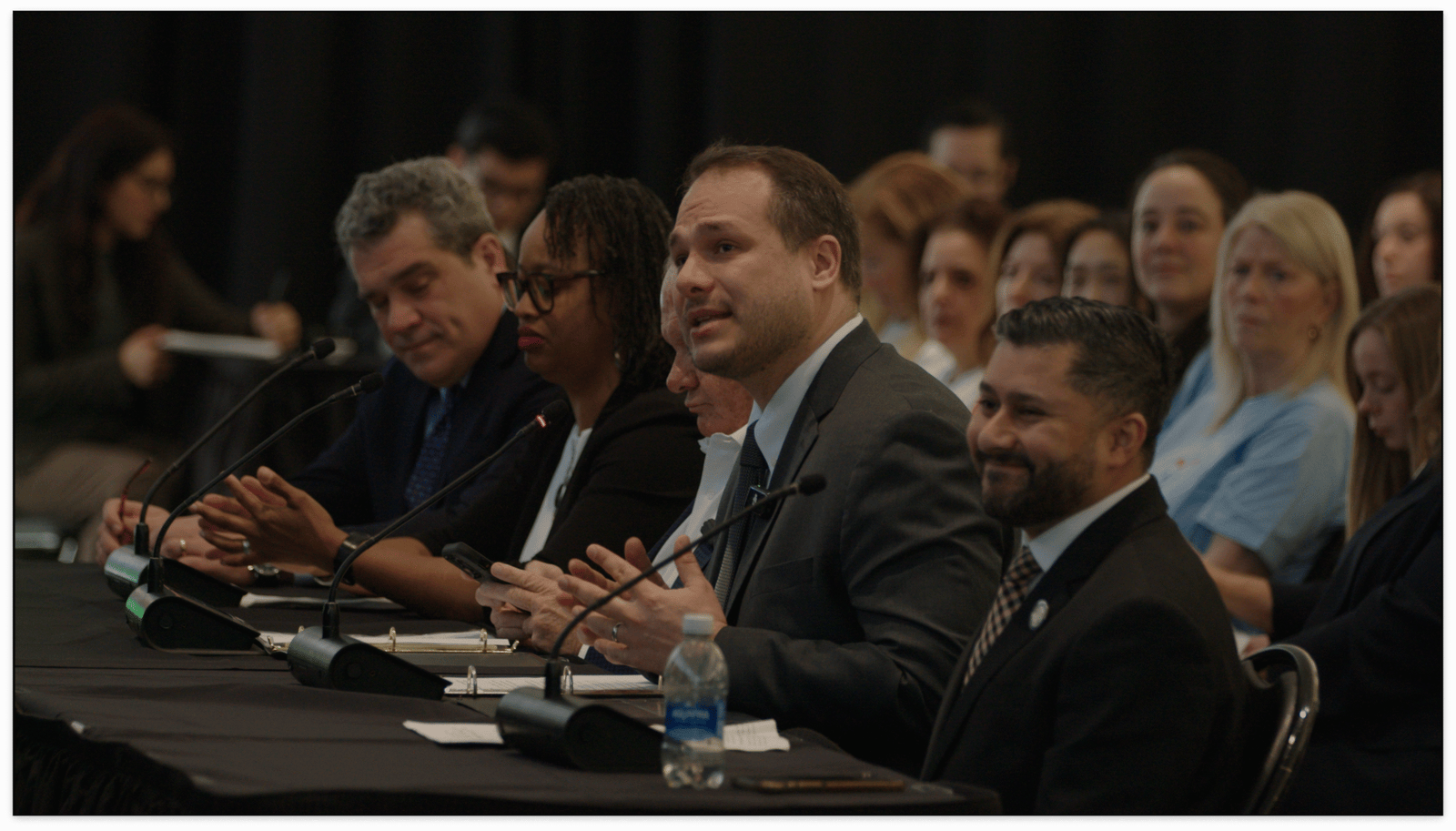
This week I stood before the New Jersey Senate Budget and Appropriations Committee and delivered a message I believe every resident of this state needs to hear: Jersey City is in a fiscal crisis, and if Trenton doesn’t act, the damage won’t stop at the Hudson River.
Let me be blunt about what we’re facing. Jersey City inherited a $250 million budget deficit — 28 percent of our entire operating budget — the result of years of deception, gimmicks, and self-dealing by the previous mayoral administration. As a city councilman, I voted against every one of those budgets and warned that these practices put our city on the path to financial instability.
That deficit is larger than our police and fire departments combined. Cutting every single civilian city employee would only get us halfway to closing it. If we’re forced to close the gap primarily through property tax hikes, we will drive families and businesses out of Jersey City. The level of tax increases needed to continue providing basic services would make life in Jersey City unbearably expensive, and the loss of that taxpayer base will be felt beyond Hudson County – it’ll be felt in statewide tax revenue.

I told the senators what too many people in Trenton seem to forget: Jersey City is the economic engine of this state. Our city seal reads “Let Jersey Prosper” — not Jersey City, Jersey — and we’ve lived up to it. In 2024, Jersey City generated an estimated $1.3 billion in income, sales, and corporate tax revenue for the state, roughly 3.1 percent of New Jersey’s major tax collections. That contribution has nearly tripled since 2010. Had our economy merely grown at the statewide average, New Jersey would be collecting $400 million less in revenue today.
We’re also doing more than our share on the state’s housing crisis. Jersey City represents 3 percent of New Jersey’s population but has produced over 15 percent of all new homes built in the state over the past decade — more than 28,000 units. Every 1,000 units we build generates roughly $20 million per year in new state tax revenue. If our growth stalls, New Jersey doesn’t just lose a city. It loses the tax base, the housing production, and the economic momentum that the rest of the state depends on.
I also told the committee something I need the rest of New Jersey to understand: Jersey City is not a wealthy city. The waterfront skyline makes for great television, but it does not reflect the reality for most of our residents. Nearly one in five Jersey City residents lives below the poverty line — almost double the statewide rate. Sixty-three percent of our public school students are economically disadvantaged. Our median household income falls below the state median. These families have already been crushed. Property taxes rose 32 percent in a single year in 2022, with more increases since. On top of that, state school aid was slashed 68 percent under the S2 formula, from $418 million to $134 million, forcing even more of the burden onto local taxpayers. Overall, our residents have seen their taxes rise more than 50 percent in five years.
We are not coming to Trenton with empty hands or looking for a long-term dependency. We switched health insurance administrators and cut $30 million in yearly spending. We killed the Pompidou museum vanity project before it burned another $40 million. We’ve directed every city department to cut spending by ten percent. We’ve brought in a new finance director and an independent team of municipal budget experts to install the systems, protocols, and professionalism that were shockingly absent before. We are building a multi-year plan to restore structural balance, and we welcome the partnership of a state fiscal monitor.
We are also not here alone. Elected officials from across Hudson County, business leaders, union representatives, civic organizations, and community groups are standing together because they understand that Jersey City’s fiscal health is inseparable from New Jersey’s fiscal health.
What I asked the Senate for is straightforward: at least $150 million in transitional aid for Jersey City’s 2026 budget. This is not a bailout. It is a bridge and an investment in a credible plan to restore self-sufficiency without destroying the working families who call our city home.
Jersey City sends $1.3 billion to this state every year. We are asking for a fraction of that back, for a limited time, to protect an asset that every New Jerseyan depends on.
The question before Trenton is simple: Will you invest in the engine, or watch it stall?