

Community
How Hudson County Colleges Are Integrating Artificial Intelligence

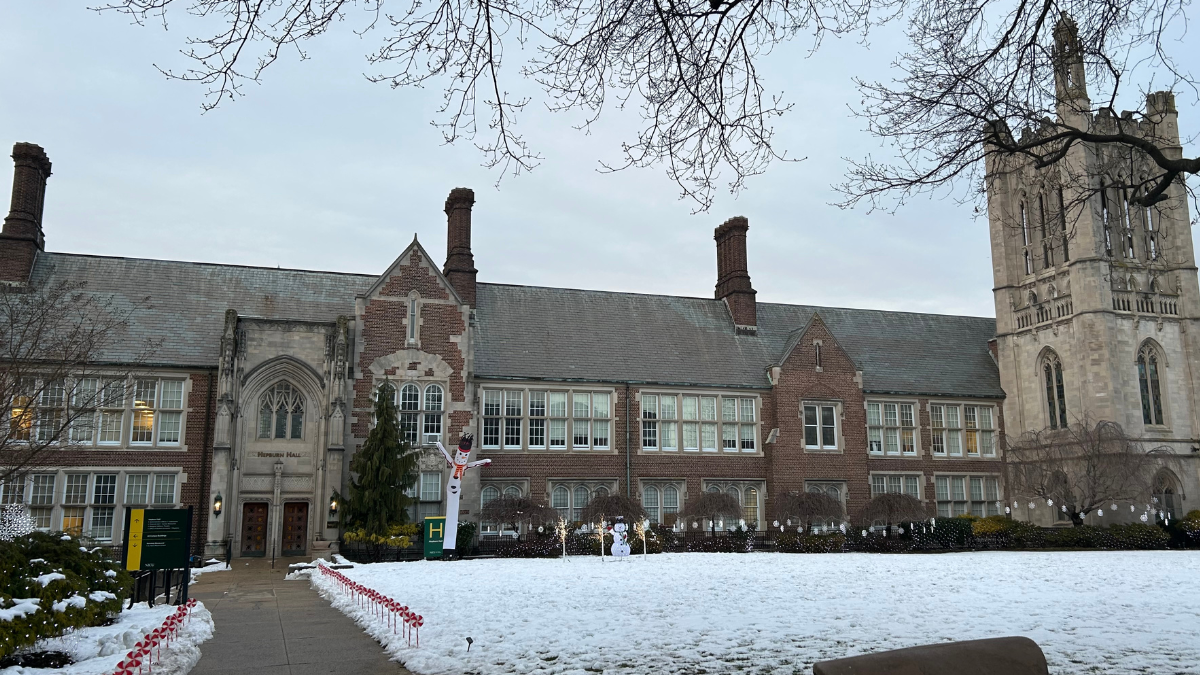
As artificial intelligence reshapes classrooms nationwide, colleges across Hudson County are beginning to adopt the technology with a notably cautious approach. Rather than embracing AI as a shortcut or replacement for student work, institutions are framing it as a supplemental tool, one that must be governed by ethics, transparency and academic integrity.
Hudson County’s colleges have largely aligned around a shared principle: AI should support learning not undermine it. Administrators and faculty have emphasized that while AI tools may assist with research, tutoring, accessibility and administrative efficiency, they should not replace original thought, critical analysis or student authorship. This philosophy has guided early policies and pilot programs now taking shape across campuses.
Most institutions have begun by integrating AI into limited, clearly defined contexts. Dr Englot a professor of artificial intelligence at the Steven’s Institute said,”it’s critical that we also teach students and faculty to ground themselves in rigorous, fundamental knowledge so that AI supports, rather than replaces, deep learning.” In classrooms, this has included AI-assisted tutoring platforms, writing support tools that focus on grammar and structure rather than content generation and software designed to help students with disabilities access course materials more effectively. At the same time, college’s have moved quickly to establish ethical guidelines governing AI use. Faculty handbooks and student codes of conduct increasingly include explicit language about acceptable and unacceptable uses of generative AI. Many courses now require students to disclose when AI tools are used, while others prohibit them entirely for graded assignments. The goal, administrators say, is not punishment but clarity, ensuring students understand where the line between assistance and academic dishonesty lies.
Faculty members across Hudson County have expressed mixed reactions. Some see AI as an opportunity to rethink outdated assignments and focus more on in-class discussion, applied learning, and project-based evaluation. Others worry that rapid adoption risks normalizing shortcuts before ethical norms are fully established. Training sessions and faculty workshops have become a key part of implementation, giving instructions space to experiment while maintaining control over their classrooms. Hudson County Community College faculty statement echos a similar sentiment,”we’re encouraging faculty to integrate AI into meaningful learning experiences, that strengthen student understanding and teach responsible use, not just automation.”